How We Prune and Top Blueberry Bushes for Easy Harvest
We walk through how we helped a customer tame overgrown blueberry rows and share exactly how to prune and top your own bushes for healthier plants and easier picking.
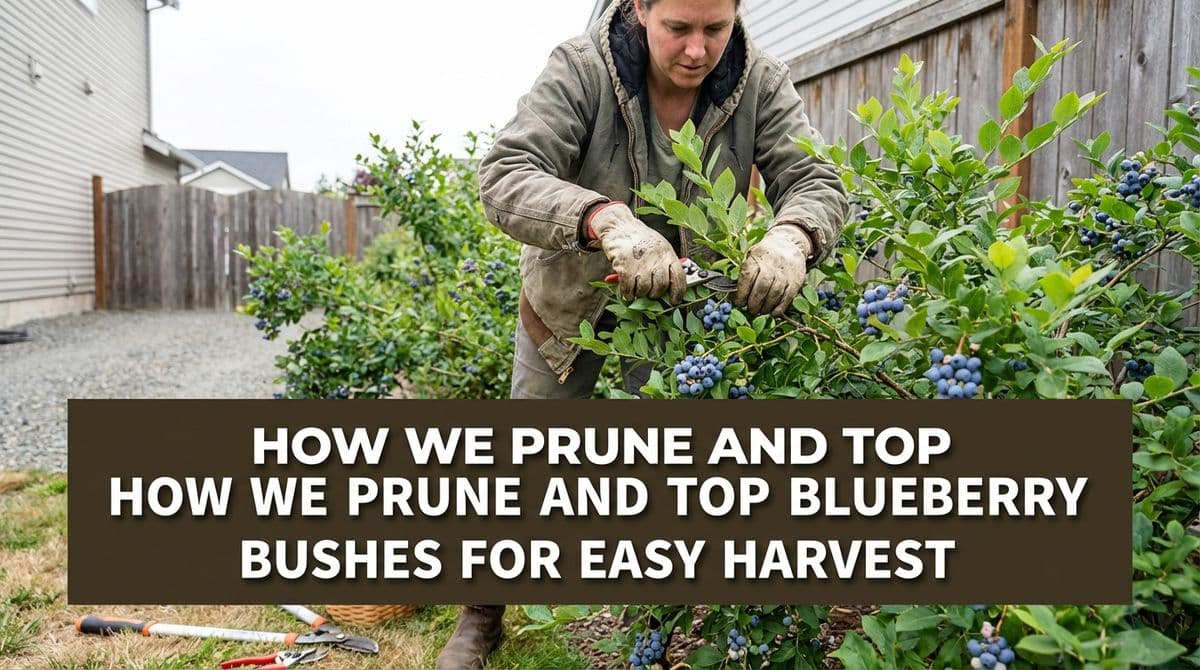
Helping a Neighbor Get His Blueberries Back Under Control
We recently got a call from a customer — let’s call him Harold — who lives just outside of town with three long, beautiful rows of blueberry bushes, each about 270 feet long. A few years back, Harold tore his bicep and rotator cuff, and ever since then he just hasn’t been able to keep up with topping his bushes.
By the time he called us, those blueberries had gotten ahead of him. They were taller than he wanted, harder to pick, and starting to shade themselves out. Harold told us he wanted them at about five and a half feet tall so he could harvest without a ladder and keep the plants healthier.
When we went out to look at his rows, we walked through together and talked about two big goals: healthier plants and easier harvesting. From there, we laid out a pruning and topping plan that you can use on your own blueberries at home.
Why Pruning and Topping Blueberries Matters
Standing in Harold’s rows, the first thing we discussed together was why regular pruning and topping is so important. A lot of folks are nervous to cut back their plants because they don’t want to lose berries, but done right, pruning actually increases long-term production.
Here’s what proper pruning and topping does for blueberry bushes:
- Improves air flow through the plant, which lowers disease risk.
- Lets more light reach the interior branches, encouraging productive new growth.
- Keeps height manageable so you can pick without a ladder.
- Reduces weak, spindly growth that produces small or poor-quality berries.
When bushes get too tall and dense, a lot of the fruit ends up high over your head or buried in the middle where you can’t easily reach it. That’s exactly what was happening in Harold’s patch, and it’s common in older, unpruned plantings.
When to Prune and Top Blueberry Bushes
As we walked Harold’s rows, we also talked about timing. For most backyard growers, the best time to do major pruning and topping is:
- Late winter to very early spring, while bushes are still dormant but the worst of the deep freeze is past.
- Before new leaves open and flower buds fully swell.
In our climate, that usually means sometime between late January and early March. In colder areas, you might be a little later; in warmer areas, a little earlier. Light touch-up pruning for dead or broken branches can be done anytime you notice a problem.
Step 1: Decide on Your Target Height
Harold knew exactly what he wanted: bushes at about 5½ feet tall. That’s a good, practical picking height for most people, and it’s similar to what we often recommend for long rows like his. The exact number isn’t as important as being consistent.
A simple trick we shared with him (and that you can use):
- Stand where you normally pick and raise your arm comfortably.
- Mark that height on a post or stake.
- Use that as your reference while you top the row so everything ends up even.
For Harold, that mark lined up right around shoulder-to-eye level, which kept most of the fruit within easy reach.
Step 2: Start with Dead, Diseased, and Crossing Wood
Before we ever talked about cutting the tops, we showed Harold how we always begin: by cleaning up what shouldn’t be there at all. Here’s the basic process we walked Harold through:
- Remove dead canes first – anything that’s gray, brittle, and doesn’t show green when lightly scratched.
- Cut out diseased or damaged branches down to healthy wood.
- Thin out crossing branches that rub against each other and create wounds.
This first pass opens the plant up and makes it much easier to see what you’re working with before you worry about height.
Step 3: Thin Out Old, Unproductive Canes
Blueberry bushes tend to fruit best on canes that are about 3–6 years old. Very old canes get thick and woody and often produce fewer, smaller berries. In Harold’s patch, we saw a lot of heavy, older canes dominating the bushes.
We explained our rule of thumb, which you can copy:
- Each year, remove 1–3 of the oldest, thickest canes at the base.
- Aim to have a mix of younger and mid-aged canes left.
- Don’t try to “fix” everything in one year; spread renewal pruning over several seasons.
This kind of gradual renewal keeps the bush productive without shocking it or wiping out your harvest in a single year.
Step 4: Topping for Height and Easier Harvesting
Once we had Harold’s bushes opened up and the worst old canes removed, we finally talked about the topping he’d originally called us for. That’s what we recommended for Harold, and it’s what we generally suggest for taller, overgrown rows:
- Use sharp loppers or a pruning saw to bring all main canes down to your target height (in his case, ~5½ feet).
- Try to cut just above a strong side branch or bud facing outward.
- Avoid leaving long, bare stubs, which can die back and invite disease.
On some very tall canes, we shortened them in stages, taking a section off and stepping back to see how the bush looked before making the final cut. The goal is a fairly level “canopy” that’s easy to harvest from and still lets light in.
Common Mistakes to Avoid When Pruning Blueberries
While we worked, Harold asked us what most folks get wrong when they try to prune blueberries themselves. Here are a few pitfalls we see again and again:
- Shearing the sides like a hedge instead of selectively removing canes.
- Never removing old wood, which gradually reduces production.
- Cutting everything all at once and shocking older plantings.
- Ignoring the center, leaving a dense interior that traps moisture.
If you focus on removing dead and old canes, opening up the center, and then setting a reasonable height, you’ll be ahead of 90% of home blueberry growers.
When It Makes Sense to Call in Help
Harold’s biggest challenge wasn’t knowing what to do – it was that his shoulder simply wouldn’t let him handle that much overhead work safely. With three long rows, the job would have been a real strain.
We always tell folks: if you have very long rows, older injuries, or mobility issues, it can be worth bringing in a crew for the heavy pruning and topping, then doing the lighter touch-ups yourself each year. That way, you get the best of both worlds: professional shaping and hands-on involvement with your plants.
Before we left Harold’s place, we walked the rows together again, talked through what we’d done, and showed him how to maintain that 5½-foot height going forward with smaller annual cuts instead of letting the bushes get away from him again.
If your blueberry patch is starting to feel a little wild, the same principles apply: clean out dead and old wood, open up the center, set a realistic height, and stay consistent from year to year. Your plants — and your back — will thank you at harvest time.