How We Plant Large Numbers of Container Trees Efficiently
Planting 200 three-gallon trees? Learn ideal hole size, auger options, and a realistic 1–2 day workflow to get large numbers of container trees in the ground efficiently.
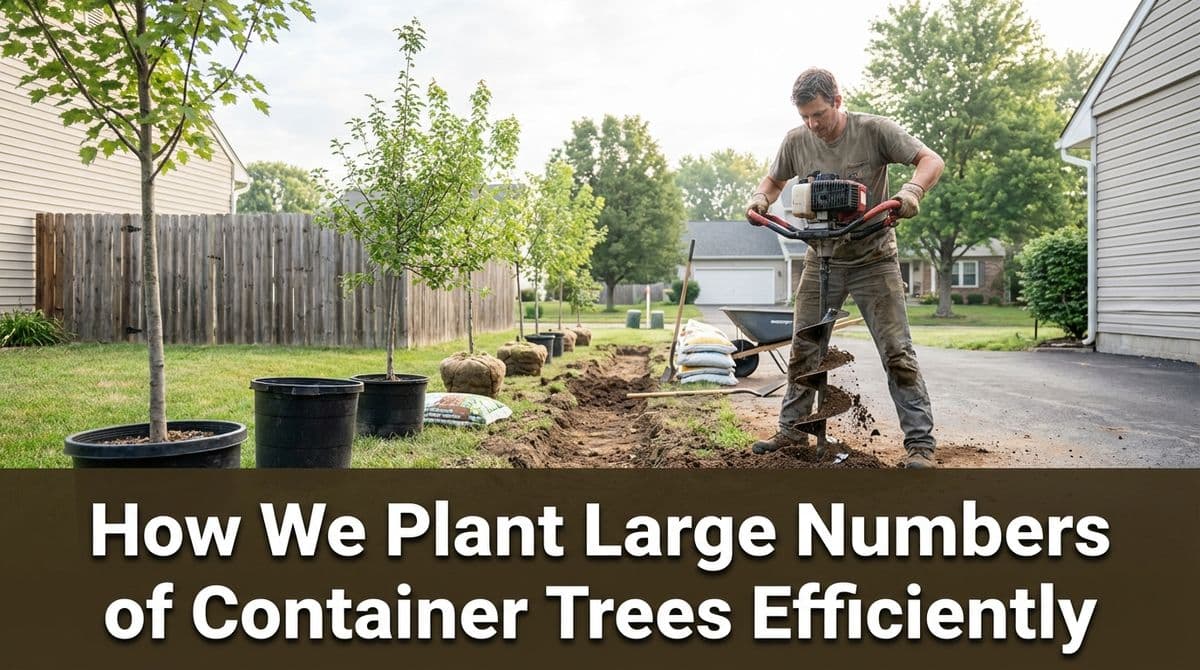
Planting 200 Container Trees: How We Plan Hole Size, Equipment, and Timing
We recently got a call from a landowner — let's call him Tom — who had about 200 three-gallon trees sitting on his property for a conservation project. He was already a couple of weeks behind schedule, had just found out he was responsible for digging all the holes, and was staring at a skid steer with an auger, wondering how he was going to pull this off in time.
Tom's questions were straightforward: How big do the holes need to be? Is his 14-inch auger good enough? Should we bring our own machine too? And realistically, how many days does it take to get 200 trees in the ground? We walk through versions of these questions a lot, so I thought it would make a helpful guide for anyone planning a larger tree-planting project.
How Big Should the Hole Be for Three-Gallon Trees?
Tom’s trees were in standard three-gallon containers, which typically run about 11 inches wide. He had a 14-inch auger on his skid steer and was worried that might be too tight.
In most soils, we like to see a planting hole about 2–4 inches wider than the root ball on all sides. For an 11-inch pot, that puts the ideal hole between about 15–18 inches wide. That said, a 14-inch auger is usually perfectly workable for three-gallon trees when you’re planting in bulk.
Here’s how we think about it:
- Container width: ~11 inches for a three-gallon pot
- Auger size: 14 inches = enough room to slide the root ball in and backfill
- Depth: Hole should be just deep enough that the top of the root ball sits level with or slightly above the surrounding soil
If you go much deeper than the root ball, you’ll end up burying the trunk flare, which can stress or even kill young trees. We often tell folks: wider is better than deeper when you’re choosing an auger or setting your depth.
Handheld Auger vs. Skid Steer: What We Actually Use
Tom asked if we used a handheld auger or a machine. For a few backyard trees, a handheld auger or even a shovel is fine. But when you’re staring at 200 holes, that’s a different story.
We typically bring a mini skid steer with a 20-inch auger. In Tom’s case, he already had a skid steer with a 14-inch bit. Our recommendation was simple: run both machines and crank through the layout together.
Here’s how the equipment trade-offs usually shake out:
- Handheld auger: Good for small jobs or tight spaces, but slow and tiring on big projects.
- Skid steer or mini skid with auger: Ideal for 50+ trees; faster, consistent hole size, and easier on your body.
- Bit size: Around 14 inches for three-gallon containers is workable; 18–20 inches gives more wiggle room in rocky or compacted soil.
If you already own a machine and a 14-inch bit like Tom did, you’re in good shape. A second machine (ours, in this case) just shortens the timeline and gives you backup if one has an issue.
How Long Does It Take to Plant 200 Container Trees?
One of Tom’s biggest concerns was time: he wanted the trees in the ground within about two weeks to stay on track with his contract. Based on the conditions he described (no irrigation install, no compost amendments, no mulch) our estimate was:
- Standard pace: About two days to plant 200 trees with machines and a small crew.
- Push pace: If everything goes smoothly, it’s possible to finish in one long day.
Factors that can slow things down include rough terrain, rocky or root-filled soil, poor access for machines, frequent layout changes, or adding irrigation and mulch. On the flip side, wide-open fields, pre-marked planting spots, and consistent soil make a big difference.
Planning Your Workflow for Efficient Planting
To keep a project like Tom’s moving smoothly, we break the work into clear stages instead of bouncing around. Here’s a simple workflow we use on larger plantings:
- Mark the layout: Flag or paint each planting spot before you ever fire up the auger. It saves more time than you think.
- Drill all the holes: Run the skid steer(s) down the rows and knock out every hole first. Aim for the right depth from the start so you’re not constantly adjusting.
- Stage the trees: Drop a container next to each hole. This lets you see spacing and swap positions before planting if needed.
- Plant and backfill: Set the root ball so it’s level with grade, cut or loosen the container roots if they’re circling, then backfill and firm the soil.
- Final check and water: Make sure each tree is upright, not buried too deep, and gets a good initial soak.
Tom planned to jump in with his own machine while we brought ours. When the property owner can safely help with augering or staging trees, it often cuts total time and labor costs.
When to Keep It Simple & When to Add Extras
Tom didn’t need irrigation, compost amendments, or mulch rings, so the plan was straightforward: holes, trees, backfill, water. For many conservation or contract plantings, that’s enough if you’ve got decent native soil and a plan to water during dry spells.
You might consider adding a bit more if:
- Your soil is very sandy or heavy clay and drains poorly.
- You expect rough drought conditions in the first growing season.
- You’re planting high-value landscape trees near a home or business.
In those cases, drip irrigation, mulch, or light soil amendments can be worth the extra time and expense.
Need Help With a Large Tree Planting?
If you’re looking at dozens or hundreds of container trees and wondering how to get them all planted efficiently, you’re not alone. With the right hole size, the right equipment, and a realistic timeline, it’s absolutely manageable — and it doesn’t have to drag on for weeks.
Whether you just need a crew with augers to speed things up or full start-to-finish planting, we’re happy to talk through your project and help you put a workable plan together.